
If you’ve ever felt like your options trades work perfectly one week… and completely fall apart the next—you’re not alone.
In many cases, the difference comes down to one critical factor:
👉 Volatility
Because in options trading, it’s not just about being right on direction.
It’s about understanding how volatility impacts:
- option pricing
- risk
- strategy selection
And that’s where many traders struggle.
What Volatility Really Means for Options Traders
Volatility—especially implied volatility (IV)—directly affects option premiums.
The basic framework looks like this:
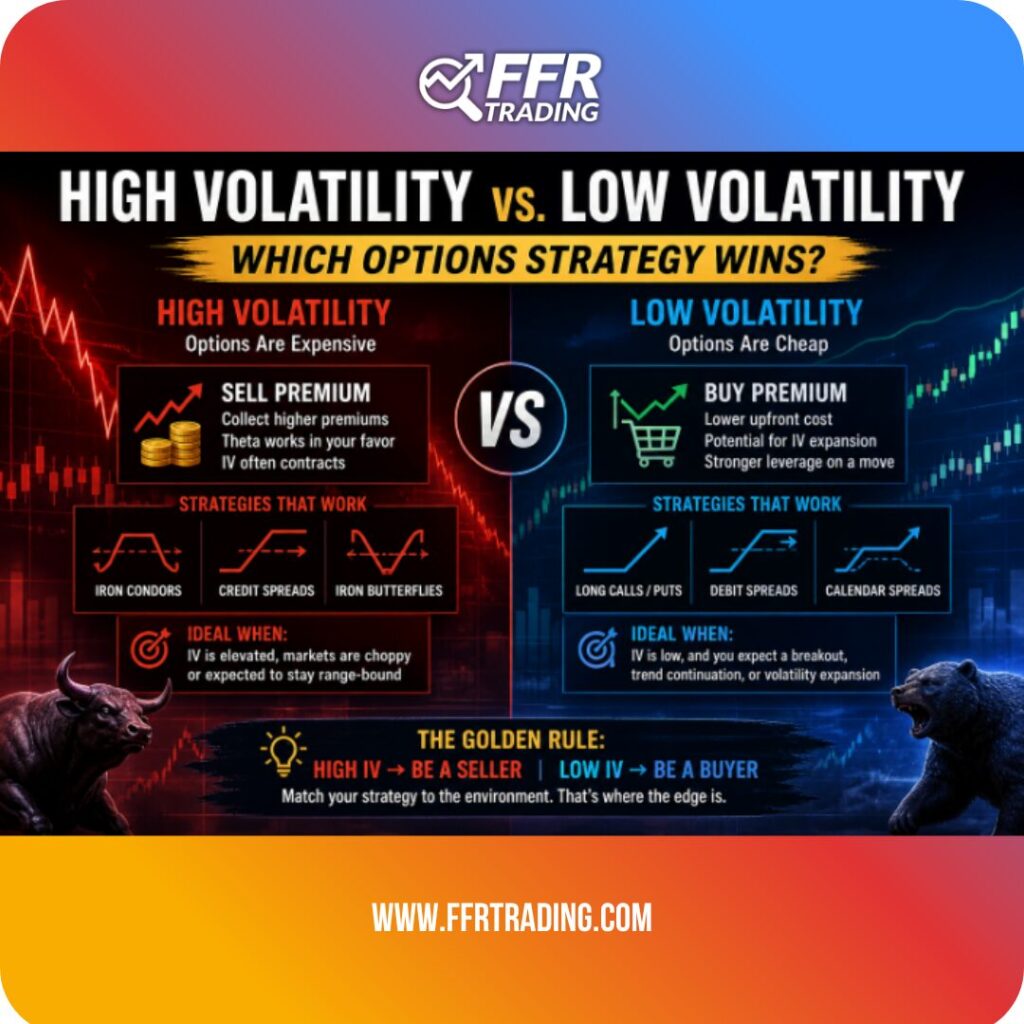
- High volatility = Expensive options
- Low volatility = Cheap options
But here’s the mistake many traders make:
👉 They use the same strategy regardless of the volatility environment.
That can lead to inconsistent results.
High Volatility: Sell Premium, Define Risk
When volatility spikes, option premiums become inflated.
That creates opportunity—not necessarily by buying options, but often by selling them.
Why Selling Premium Works in High Volatility
- Higher premiums collected
- Time decay (theta) works in your favor
- Volatility often contracts after sharp spikes
Common High-Volatility Strategies
- Credit spreads
- Iron condors
- Iron butterflies
These strategies can help traders:
- take advantage of expensive options
- define maximum risk
- potentially profit even in sideways markets
Low Volatility: Buy Premium, Target Bigger Moves
When implied volatility is low, options become cheaper.
This is where buying options can make more sense.
Why Buying Works in Low Volatility
- Lower upfront cost
- Greater potential for volatility expansion
- Increased leverage if a strong move develops
Common Low-Volatility Strategies
- Long calls and puts
- Debit spreads
- Calendar spreads
These strategies are often used when traders expect:
- breakouts
- trend continuation
- expanding volatility
The Key Shift Most Traders Miss
Here’s the simple framework:
👉 High IV = Be a seller
👉 Low IV = Be a buyer
But the real edge isn’t just understanding this concept.
It’s applying it consistently.
Many traders:
- buy options when they’re expensive
- sell options when they’re cheap
- ignore volatility completely
And that’s often why results become inconsistent.
Why Strategy Selection Matters More Than Direction
One of the biggest lessons in options trading is this:
👉 You can be right on direction—and still lose money.
For example:
- Buy a call during high volatility → IV collapses → option loses value
- Sell premium during low volatility → IV expands → trade moves against you
Volatility can completely change the outcome of a trade.
That’s why professional traders constantly ask:
“What environment am I trading in?”
before selecting a strategy.
How to Simplify Your Trading Approach
You don’t need dozens of strategies.
You need a repeatable framework:
- Identify the volatility environment
- Match the strategy to the environment
- Define risk before entry
- Execute consistently
That’s it.
The Bottom Line
There’s no single “best” options strategy.
There’s only the right strategy for the current market environment.
- High volatility often rewards premium sellers
- Low volatility often rewards premium buyers
👉 The traders who adapt… are usually the traders who last.
⚠️ Disclaimer: Options trading involves substantial risk and is not suitable for all investors. Past performance is not indicative of future results.