
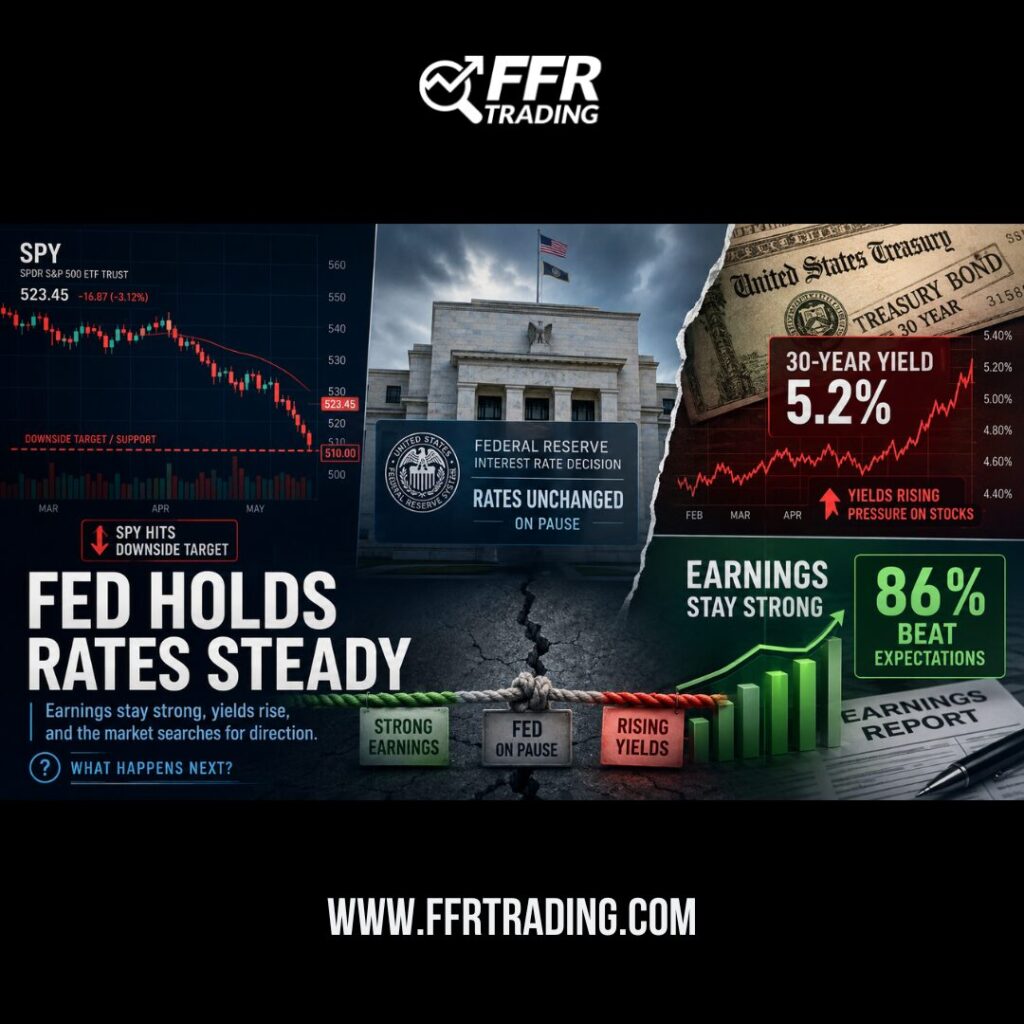
The Fed leaves interest rates unchanged as Wall Street tries to balance three major forces: strong corporate earnings, rising bond yields, and the market’s next move. Investors are now weighing whether upbeat earnings can offset the pressure created by higher long-term Treasury yields.
Following the Fed’s latest announcement, the SPY moved lower and reached the downside target I highlighted last week. At the same time, the 30-year Treasury yield surged to approximately 5.2%, creating another potential challenge for stocks.
Higher long-term interest rates can put pressure on the market. They increase borrowing costs for businesses and consumers while making bonds more attractive compared with stocks. Growth companies can be especially sensitive because higher yields reduce the present value of their expected future earnings.
Strong Earnings Continue to Support Stocks
Despite the pressure from the bond market, corporate earnings have remained surprisingly strong.
Approximately 86% of the companies that have reported earnings so far have beaten expectations. That level of earnings strength gives investors a reason to remain optimistic and may help offset some of the concerns surrounding higher interest rates.
This creates an unusual tug-of-war.
On one side, rising Treasury yields and tighter financial conditions could weigh on stock valuations. On the other, strong earnings results show that many companies are still performing better than analysts expected.
The Fed Maintains a Neutral Position
The Federal Reserve added another layer of uncertainty by leaving interest rates unchanged.
The announcement was relatively neutral. Policymakers did not deliver a major surprise or clearly signal an immediate change in direction. That leaves investors focused on upcoming inflation reports, employment data, economic growth, and future comments from Fed officials.
For now, the market must decide whether strong corporate earnings can outweigh the pressure created by elevated bond yields.
What Happens Next for the SPY?
The SPY reaching last week’s downside target was an important technical development. The next question is whether buyers will step in at these levels or whether rising yields will lead to another leg lower.
Several factors will help determine the market’s next move:
- Whether the 30-year Treasury yield continues climbing
- How the SPY reacts near its current support levels
- Whether earnings results remain strong
- How investors respond to upcoming economic data
- Whether the Fed’s tone becomes more hawkish or dovish
With earnings, bonds, and the Federal Reserve all pulling the market in different directions, volatility could remain elevated.
So, how will this battle ultimately get sorted out?
Find out what I’m watching next in this week’s Market Minute.