
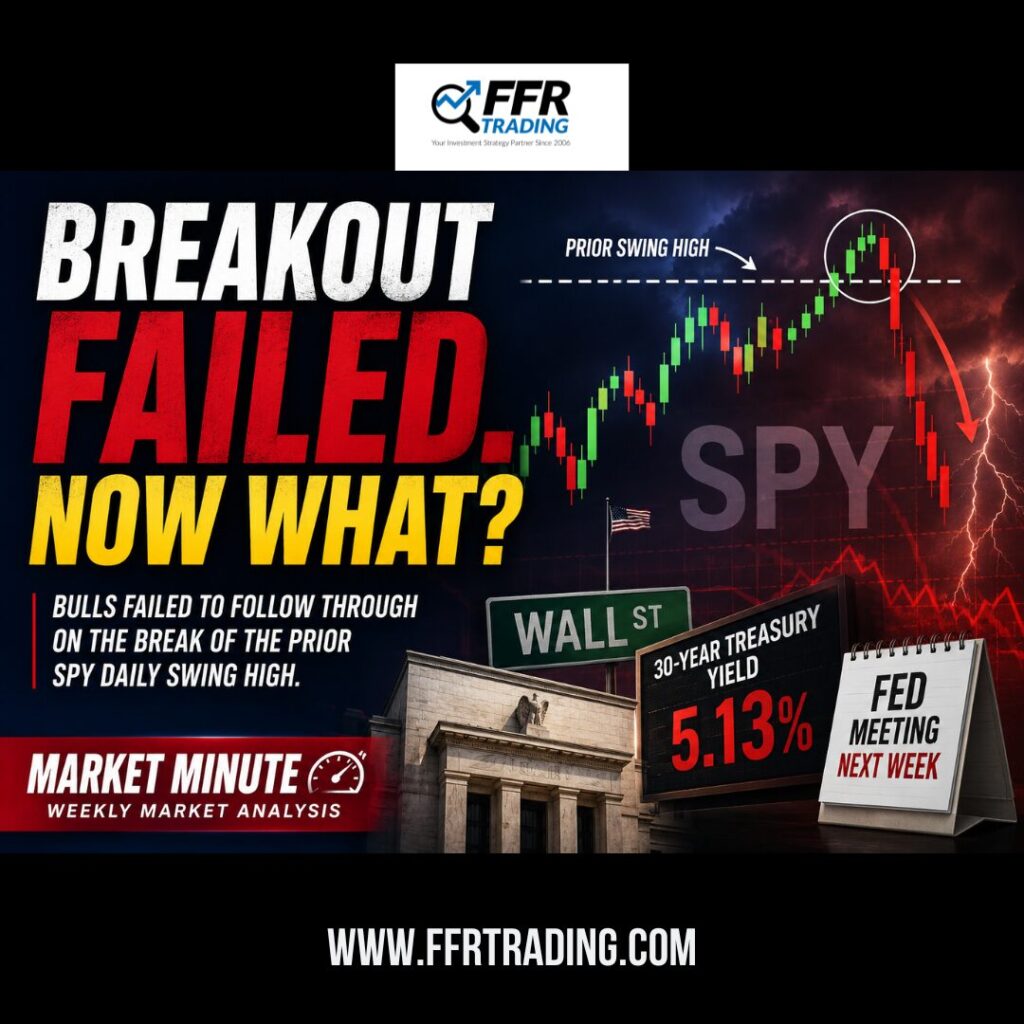
The market appeared ready to make its next move higher. The S&P 500 ETF (SPY) finally pushed above its prior daily swing high, giving bulls reason to believe a fresh leg of the rally was underway. But instead of accelerating higher, buyers quickly lost momentum.
Now traders are asking the obvious question: Was this simply a pause—or the beginning of a deeper pullback?
A Failed Breakout Changes the Picture
Technical analysis is built on the idea that price trends often continue once key resistance levels are broken. However, not every breakout succeeds.
When buyers fail to follow through after pushing prices above resistance, it can be an early warning that bullish momentum is fading. Rather than attracting additional buyers, the breakout begins to lose steam, allowing sellers to regain control.
That appears to be what we’re seeing in the SPY.
While the longer-term trend remains constructive, the inability to build on the breakout suggests investors are becoming more cautious as several important market catalysts approach.
Interest Rates Are Back in Focus
One reason for the hesitation is growing concern over Federal Reserve policy.
Recent comments have fueled speculation that another interest-rate hike could still occur before the end of the year. Even the possibility of tighter monetary policy has caused investors to rethink risk.
Adding to those concerns is the bond market.
As of July 23, the 30-year U.S. Treasury yield reached approximately 5.13%, offering investors attractive returns with relatively low risk compared to equities. Higher long-term yields also increase borrowing costs for businesses and consumers, creating another potential headwind for stocks.
All Eyes on the Federal Reserve
The Federal Reserve meeting next week could become the market’s next major catalyst.
Investors will be watching closely for clues about:
- The future path of interest rates
- Inflation expectations
- Economic growth
- The Fed’s outlook for the remainder of the year
Even if policymakers leave rates unchanged, subtle changes in the Fed’s language can move markets sharply.
That’s why many traders are choosing patience over aggressive positioning until the announcement is behind us.
What Traders Should Watch
Rather than reacting emotionally to every headline, focus on what price is telling you.
Some key questions include:
- Can the SPY reclaim and hold above the recent breakout level?
- Will buyers step back in after the Fed meeting?
- Does market leadership broaden, or do investors continue rotating into defensive areas?
- Are Treasury yields continuing to rise, or beginning to stabilize?
The answers to those questions may provide important clues about the market’s next direction.
The Bottom Line
Failed breakouts don’t automatically signal the end of a bull market. Sometimes they simply represent a period of consolidation before another advance.
However, when a failed breakout occurs just ahead of a major Federal Reserve meeting—and while long-term Treasury yields remain elevated—it deserves traders’ attention.
Patience, disciplined risk management, and confirmation remain your best allies until the market reveals its next move.
If volatility returns after the Fed announcement, traders who stay prepared—not reactive—will likely be in the best position to capitalize on the opportunities ahead.