
Fed Rate Hike Puts Markets on Alert
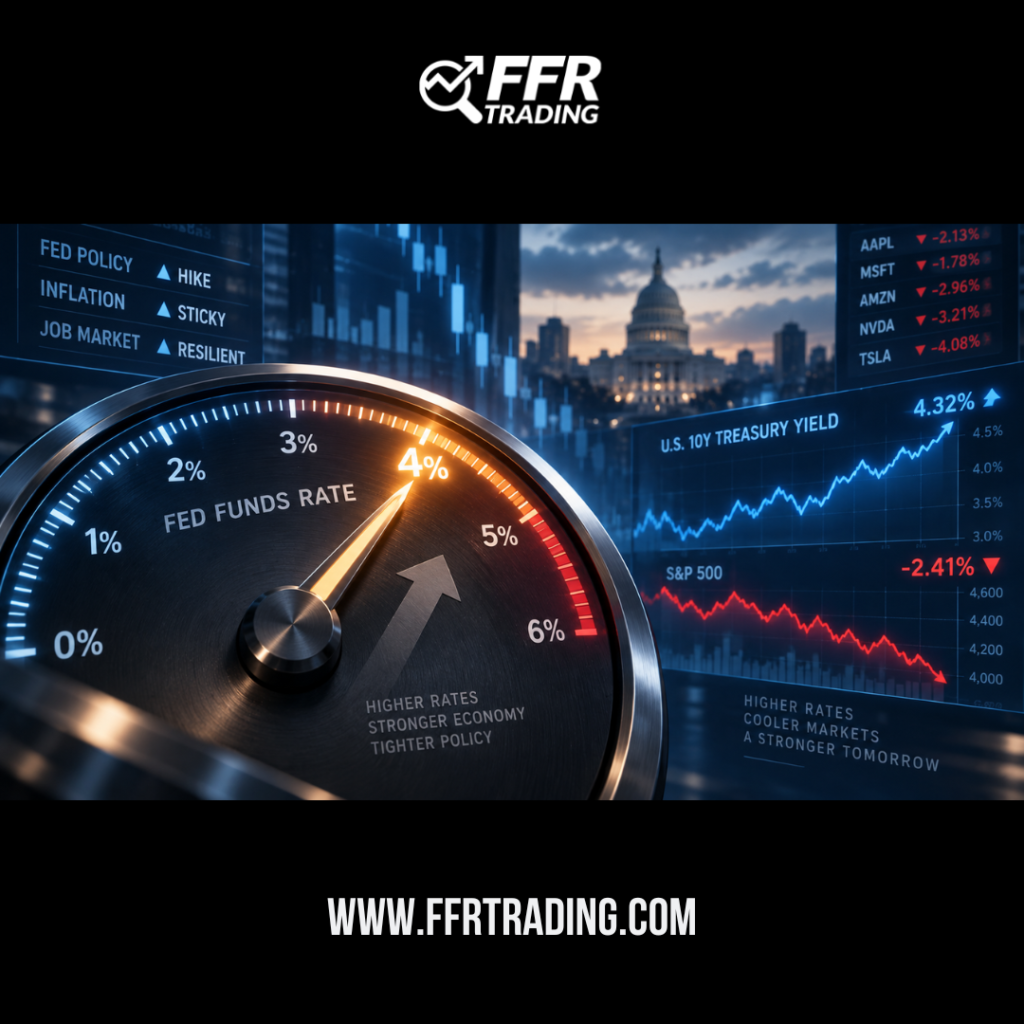
The Fed rate hike is now official, and investors are turning their attention to what comes next for stocks, Treasury yields and inflation.
The Federal Reserve raised interest rates Wednesday by 0.25 percentage point, bringing the federal funds target range to 3.75%–4.00%. It was the central bank’s first rate increase in more than three years.
But the bigger question for markets is whether this was a one-time adjustment—or the beginning of a broader tightening cycle.
Federal Reserve projections showed that most policymakers expect at least one additional rate increase before the end of 2026.
That possibility could keep interest rates and Treasury yields near the center of the market conversation.
Why the Fed Raised Rates
The Fed continues to face persistent inflation pressures alongside an economy that has remained relatively resilient.
Higher energy prices and other inflationary pressures have complicated the central bank’s effort to return inflation toward its long-term 2% goal.
At the same time, economic growth and employment have remained strong enough to give policymakers room to tighten monetary policy.
That combination helped set the stage for Wednesday’s Fed rate hike.
For traders, the key question is whether inflation begins cooling—or forces the Fed to tighten further.
Treasury Yields Could Be the Key
One of the most important indicators to watch now is the bond market.
Rising interest-rate expectations can push Treasury yields higher, increasing borrowing costs throughout the economy.
Higher yields can also create competition for stocks because investors may receive more attractive returns from government bonds without taking equity-market risk.
Technology and other high-growth stocks can be particularly sensitive because higher interest rates reduce the present value investors place on future earnings.
The 10-year Treasury yield will therefore remain an important market indicator in the days ahead.
For current Treasury-market information, traders can follow the U.S. Treasury’s official market data.
Fed Rate Hike: Watch the Market’s Reaction
Markets don’t simply trade headlines.
They trade expectations.
Wednesday’s quarter-point increase was largely anticipated, meaning investors may focus more heavily on what the Fed does next.
Stocks initially pulled back following the announcement before stabilizing as investors processed the Fed’s projections and comments from policymakers.
The next several sessions could provide valuable clues.
If stocks can hold important support levels despite higher interest rates, investors may still be comfortable with the economic outlook.
If Treasury yields continue climbing and major indexes begin breaking support, however, tighter monetary policy could become a larger headwind.
Three Things Traders Should Watch
Treasury yields: Watch how the 10-year Treasury responds to expectations for additional Fed tightening.
Inflation: Upcoming CPI, PPI and PCE reports could influence whether the Federal Reserve raises rates again.
Market support: Pay attention to how the S&P 500 and Nasdaq behave around recent technical support levels.
You can also review our recent 10-Year Treasury Yield Hits 5%: Why Stocks Are Paying Attention article for more on why the bond market has become increasingly important for equity traders.
What Happens Next?
The Fed has made its move.
Now the market has to decide whether higher rates are simply an adjustment to persistent inflation—or the beginning of a more meaningful shift in monetary policy.
The answer may become clearer through the behavior of Treasury yields, inflation data and the major stock indexes over the coming weeks.
For traders, the goal isn’t to predict every Fed decision.
It’s to watch the market’s reaction and adjust accordingly.